
In collaboration with the staff of the Hungarian Olympic Committee (HOC) and in the presence of distinguished guests, the newly established IOC Olympic Studies Research Centre was recently introduced at HUSS, and it is expected to become Hungary’s leading intellectual hub for Olympic studies.
Amid significant media interest and with notable guests attending, SPIRIT – Olympic Studies Research Centre was officially presented on Thursday in the university’s Rome hall. The centre is based at Hungarian University of Sports Science (HUSS), an institution long committed to the Olympic movement, as well as to Olympic values and traditions.
The IOC Olympic Studies Research Centre, headquartered in Lausanne, of which only a few exist worldwide, now including one at HUSS, was founded in 1982 during the presidency of Juan Antonio Samaranch. Its aim is to contribute to the understanding, education, and research of Olympism. The centre’s core mission is to disseminate Olympic knowledge and values in a scientifically grounded manner, integrate them into education and training systems, and promote and support Olympic-related research and academic publications.
At the opening event, alongside representatives of the university and its maintaining foundation, attendees included Szilvia Szabó, Secretary General of the BOM Foundation; Tamás Märcz, Olympic champion water polo player and ambassador of the National Institute for Sports Development and Methodology; and Dénes Antal, HOC’s Managing Director.
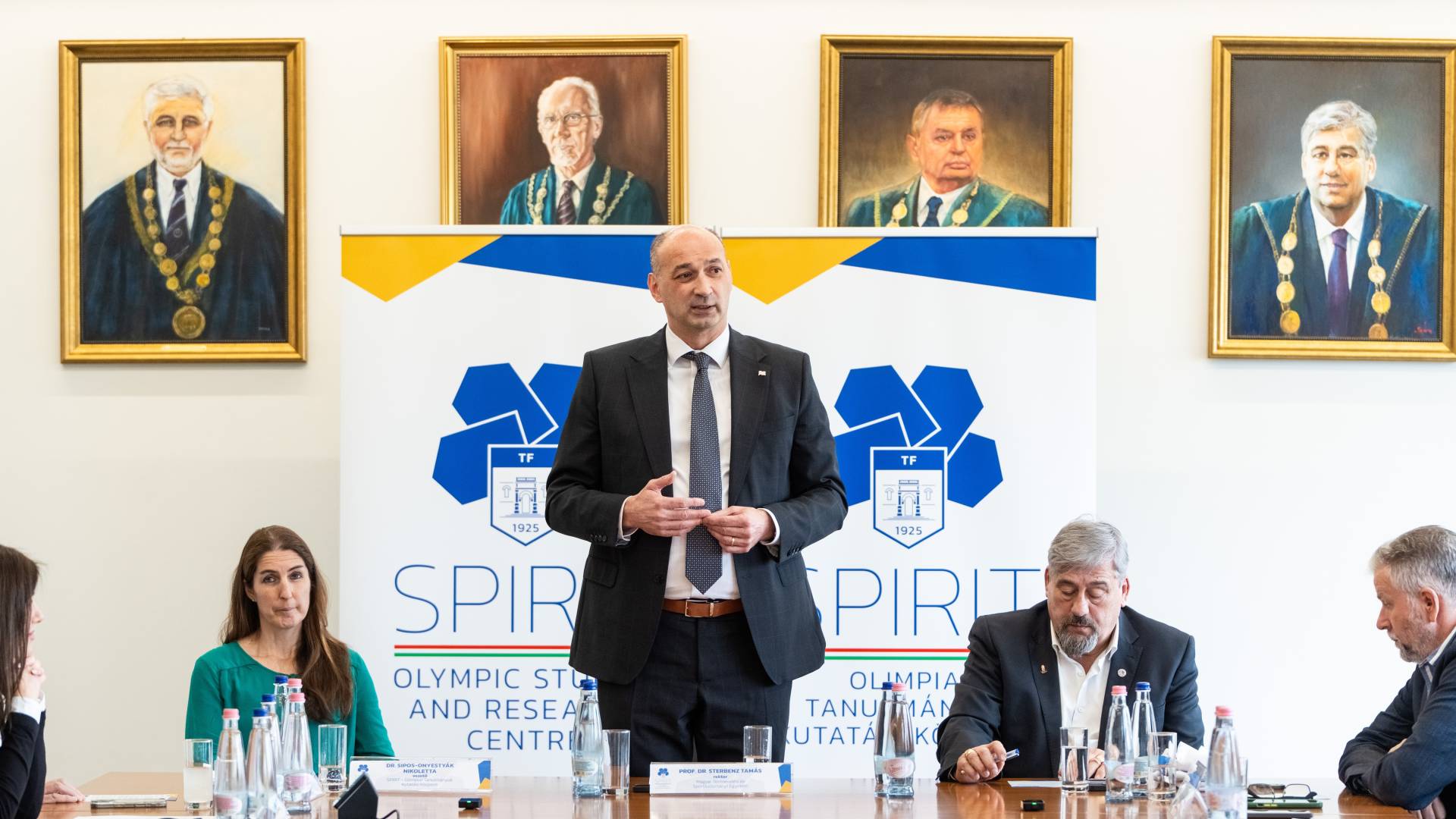
In his opening speech, Rector Prof. Tamás Sterbenz emphasized that the establishment of the centre represents international recognition of the work HUSS has accomplished and represents in both natural and social sciences. Through the operation of the centre, one of the university’s goals is to become an internationally recognized higher education institution. He also shared two positive updates: compared to 2025, the number of Hungarian applicants wishing to study at HUSS has increased by more than a quarter, while the number of international students has risen by 50 per cent. He also announced the TF100+ scholarship program, aimed at supporting students’ future careers in various fields.
László Fábián, HOC’s Secretary General highlighted that only a few Olympic Studies Research Centres exist worldwide, further enhancing the value and reputation of the one established at HUSS. He expressed appreciation that the centre was founded at Hungary’s leading sports science university and added that the HOC will continue to support HUSS and the centre as a reliable partner.
Following this, Fábián presented gift packages on behalf of the HOC to HUSS sports management students Péter Gurdán, Hunor Juhász-Lehi, Miklós Zelcsényi, and Gergő Varga, who performed successfully in an international case study competition organized by the IOC Olympic Studies Centre for university students from around the world.
Prof. Lajos Mocsai, Chairman of the Board of Trustees, pointed out that the centre’s future research will strengthen the universal values represented by HUSS both domestically and internationally.
Recognition also came from abroad: Maria Bogner, Head of the Olympic Studies Centres in Lausanne, congratulated HUSS in a video message.
Dr Nikoletta Sipos-Onyestyák, acting head of the centre and assistant professor at the Department of Sport Management, thanked HOC for its support during the application process, outlined the centre’s goals and planned activities, and mentioned several innovations that will support its work, including a virtual Olympic collection made possible through the university library.
Dr Tamás Csányi, Head of the Department of Physical Education Theory and Teaching Methodology and representative of the Olympic Values Education Programme (OVEP), revealed that since 2023, through ongoing training programs, the IOC’s key educational initiative has reached 330 educators across more than 200 schools, enabling participants to learn about Olympic ideals and values.
Denissza Blanár, HUSS’s Director of International Relations Centre, emphasized that the establishment of the centre could make the university even more attractive to both domestic and international students.
At the end of the ceremony, László Fábián presented the official Olympic flag of the Hungarian Olympic Committee to Tamás Sterbenz and Lajos Mocsai. The flag will be raised in front of the main building, symbolizing the continuity of the Hungarian Olympic movement, HUSS’s commitment to sport and Olympism, and the unity of the HUSS and HOC communities.
Photo: Péter Tamás


